Table of Contents
- What Does Military-Grade Protection Mean?
- How Are Military-Grade Phone Cases Tested?
- Does Military-Grade Protection Actually Matter?
- Features Commonly Found in Military-Grade Protection Cases
- Military-Grade Protection vs Regular Phone Case
- Common Misconceptions About Military-Grade Protection
- What to Actually Look for Before You Buy
- Our Cases with Military-Grade Protection
- Conclusion
- Frequently Asked Questions
Your phone is expensive. More expensive than it probably should be. So when the screen cracks from a waist-height drop onto tile which is one of the most common ways phones break — it stings in a way that goes beyond the repair bill.
Drop protection is the single most important thing a phone case does. Everything else color, grip, wireless charging compatibility comes second. And when you start shopping for a protective case, you'll run into the term military-grade protection almost immediately. It's on half the cases on Amazon. It's in bold on the packaging. It sounds reassuring.
But what does it actually mean? And does it hold up when your phone slips out of your pocket?
What Does Military-Grade Protection Mean?
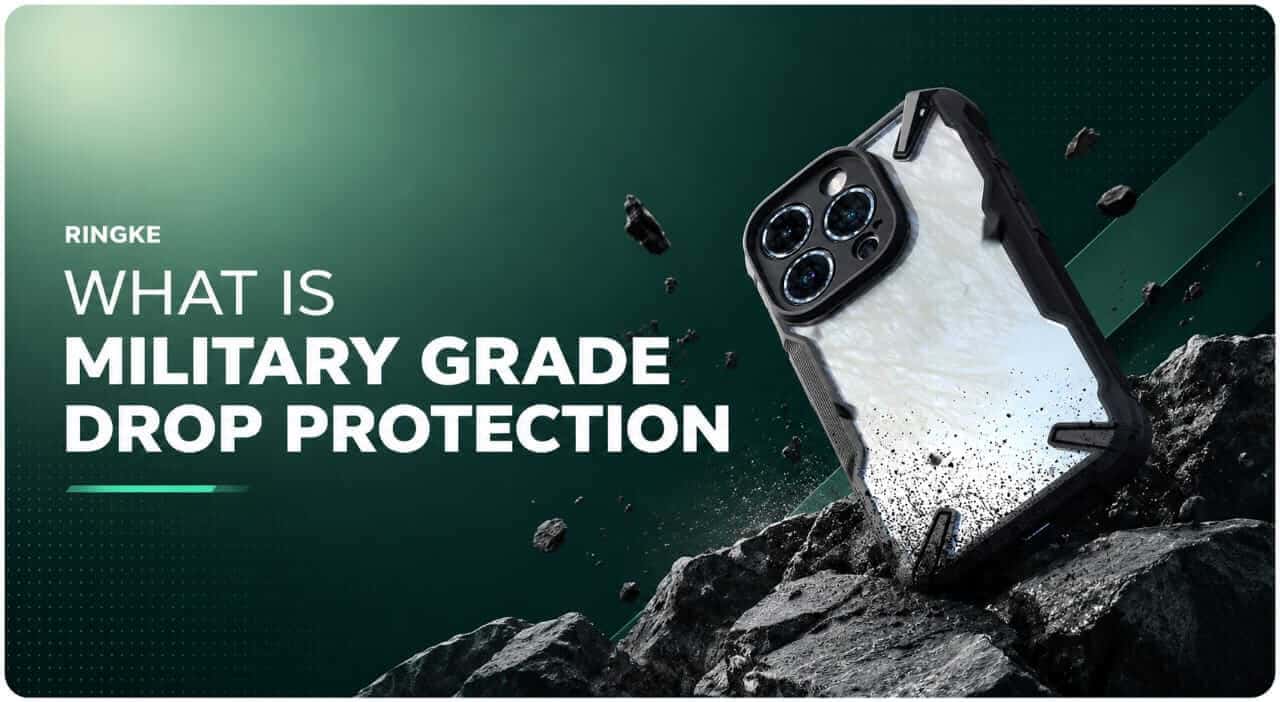
Military-grade protection refers to a testing standard set by the U.S. Department of Defense — specifically MIL-STD-810, which covers how equipment holds up under physical and environmental stress. The version most commonly referenced in phone cases is MIL-STD-810G, issued in 2008. A newer revision, MIL-STD-810H, followed in 2019 with updated test procedures.
The standard covers a wide range of conditions: drops, temperature extremes, humidity, vibration, altitude, and more. For phone cases, the relevant test is almost always Method 516.6 — the drop test.
What military-grade does not mean: indestructible. The standard was designed for military equipment operating in field conditions — not for consumer devices surviving a fall from a nightstand. The label borrows that credibility, but the scope is much narrower.
Here's the catch most buyers don't know: there's no third-party body that certifies these claims. A brand can run the tests in-house, pass their own results, and print MIL-STD-810G on the box. Which is why the question isn't just "is it military-grade?" it's "did they actually run the test, and do they publish the specs?"
How Are Military-Grade Phone Cases Tested?
The standard drop test Method 516.6 puts a device through 26 consecutive drops from 4 feet (1.2 meters) onto a hard impact surface. Each drop hits at a different angle: corners, edges, face-down, back-down. If the device survives all 26 without functional damage, the case passes.
Corner impacts are where most cases fail. When a phone drops, the corners take the first hit in the majority of real-world scenarios. The case design has to dissipate that impact energy before it reaches the glass or internal components and that requires more than just bulk.
The testing surface and drop height also matter. Lab conditions often use controlled plywood. Real life means concrete, tile, asphalt. A case can pass a standardized test and still underperform on an uneven real-world surface.
Brands that publish their exact test specs height, surface, number of drops are the ones worth trusting. Vague references to "military-grade standards" without specifics are harder to evaluate.
Does Military-Grade Protection Actually Matter?
For most people, yes and here's why.
The drops that break phones aren't dramatic. They're mundane. Phone slides off a desk. Falls out of a pocket when you sit down in the car. Slips off a bathroom counter onto tile. These are the exact scenarios that MIL-STD-810G Method 516.6 is designed to simulate waist-height drops, multiple angles, hard surfaces.
A properly tested military-grade phone case is engineered to survive exactly these situations. A generic "shockproof" case with no published testing data is just a marketing claim with no evidence behind it.
The repair cost argument is also real. Screen replacement on an any mobile runs ₹8000 -₹12000 . A well-built drop protection phone case costs a fraction of that. The protection is worth paying for as long as the testing behind it is genuine.
Features Commonly Found in Military-Grade Protection Cases
Not all military-grade drop protection cases look the same, but they share a set of structural features that separate them from basic cases:
Reinforced corners Dedicated corner cushions or air pockets that absorb the energy from corner drops before it reaches the frame. This is the most important feature, not extra thickness.
Dual-layer construction TPU (thermoplastic polyurethane) handles the flex and shock absorption. Polycarbonate holds the rigid structure. Together they give drops two stages of resistance instead of one.
Raised bezels The lip around the screen and camera should sit high enough that glass doesn't touch a flat surface in a face-down drop. Minimum 1.5mm. Better at 2mm.
Camera protection Camera rings or raised surrounds prevent lens contact when the phone lands back-down, which happens more often than most people expect.
Impact-dispersing construction — Good cases move energy away from the phone's vulnerable points. Air cushion corners, channeled bumpers, and contoured frames all do this differently.
Enhanced grip texture A case you can hold is a case that gets dropped less. Grip texture on the sides and back reduces the chance of the drop happening in the first place.
Military-Grade Protection vs Regular Phone Case
Feature | Military-Grade Case | Regular Case |
Drop resistance | Tested to MIL-STD-810G/H | Untested or unverified |
Corner protection | Reinforced air cushions | Basic padding or none |
Material quality | Dual-layer TPU + polycarbonate | Single-layer TPU or silicone |
Device protection | Screen,camera,andframe coverage | Varies widely |
| Everyday usability | Slim to moderate bulk | Generally slim |
Common Misconceptions About Military-Grade Protection
"Military-grade means the phone can't break."
It doesn't. MIL-STD-810G covers 26 drops from 4 feet. A 6-foot fall onto concrete at the wrong angle will test any case. The standard gives you reliable everyday protection, not invincibility.
"All military-grade cases offer the same protection."
They don't. The standard allows significant flexibility in how tests are conducted. A brand that ran full third-party drop tests at 1.5 meters on concrete is not the same as one that self-tested at 1.2 meters on plywood and called it a day.
"Thicker always means better protection."
Not true. A thick case with poor corner design will fail before a slimmer case with proper air-cushion corners. Engineering matters more than bulk.
What to Actually Look for Before You Buy
Published test specs. If the brand names the specific MIL-STD method, drop height, and surface they ran the test. If they just say "military-grade" and stop there, that's worth questioning.
Corner construction over thickness. Air pockets and dedicated corner guards outperform cases that just add bulk. A slimmer case with proper corner engineering survives drops that a thick but poorly designed case won't.
Wireless charging compatibility. A quality military-grade case shouldn't need to come off for wireless charging. Check before you buy.
Grip on the sides. The best drop protection is not dropping your phone. Proper grip texture on the sides and back reduces the chance of the slip before it becomes a drop.
Match protection to your lifestyle. Someone who works outdoors needs different coverage than someone whose phone mostly sits on a desk. Think about where your phone actually goes before picking a protection level.
Our Cases with Military-Grade Protection
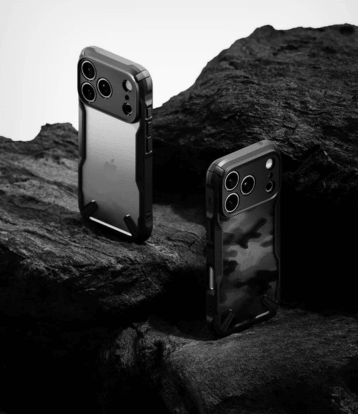
Fusion X — Clear Back, Dual-Layer Drop Defense
The Fusion-X Case runs dual-layer TPU and polycarbonate, MIL-STD-810G-516.6 certified, with inner corner air cushions and a raised camera bezel for face-down drop protection. Clear back so your phone's original colour still shows through. Same build, same protection across every model we carry — shop by your device: iPhone 17 Fusion-X Case | Samsung Galaxy S26 Ultra Fusion-X Case | OnePlus Fusion-X Case
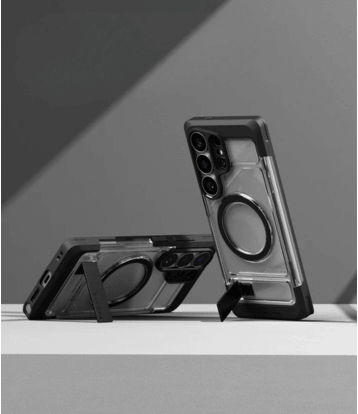
UX Magnetic — MagSafe-Ready, Military-Grade Certified
The UX Magnetic Case combines MIL-STD-810G-516.6 certified drop protection with built-in MagSafe compatibility — so you get verified everyday drop coverage without giving up wireless charging or magnetic accessory support. Built for people who want serious protection and a seamless ecosystem experience. Shop by your device: iPhone 17 pro max UX Magnetic Case | Samsung Galaxy S26 Ultra UX Magnetic Case
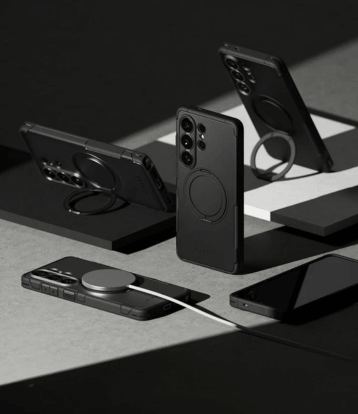
Alles — Slim Daily Coverage
The Alles Case is for when you want dependable everyday protection without carrying extra weight. Lighter on the pocket, easier to handle, still protective enough for the drops that actually happen most — counter edges, pocket slips, desk falls. If your life is mostly office, commute, and dinner table, this handles it cleanly. Shop by your device: iPhone 17 Alles Case | Samsung Galaxy S26 Ultra Alles Case
Note on other cases: The Onyx and Fusion cases offer strong everyday protection through quality construction and materials, but are not MIL-STD-810G certified. If certified military-grade drop protection is your priority, the Fusion X, UX Magnetic, and Alles are the right choices.Conclusion
Military-grade protection is a real and meaningful standard — when the brand behind it actually ran the test. MIL-STD-810G and MIL-STD-810H give manufacturers a rigorous framework for drop testing, but the label alone doesn't guarantee anything. What matters is whether the testing was done, documented, and published.
For everyday users, a verified military-grade phone case handles the drops that actually happen: desk falls, pocket slips, bathroom tiles. That's the protection worth paying for. Not the thickest case on the shelf. Not the loudest marketing claim. The one with real test data and the construction to back it up.
Frequently Asked Questions
1.What does military-grade protection mean for phone cases?
It refers to testing based on MIL-STD-810G or MIL-STD-810H — U.S. Department of Defense standards. For phone cases, this typically means surviving 26 drops from 4 feet (1.2 meters) at multiple angles onto a hard surface. The case passes if the phone comes through without damage.
2.Is MIL-STD-810G testing reliable?
It's reliable when conducted and published transparently. The standard itself is rigorous — 26 multi-angle drops at a specific height. The issue is there's no mandatory third-party certification, so brands can self-test. Look for brands that publish their exact test parameters rather than just printing the label on the box.
3.Are military-grade phone cases worth buying?
For most people, yes. Screen repairs on modern smartphones cost $7000–$1000. A properly tested drop protection case costs significantly less and handles the drops that actually happen in daily life. The value is real when the protection behind the label is real.
4.Does military-grade protection guarantee a phone won't break?
No. MIL-STD-810G tests 26 drops from 4 feet. Extreme falls high heights, sharp surfaces, bad angles can damage any phone regardless of case. Military-grade protection covers everyday scenarios well. It's not a guarantee against every possible drop.
5.What features should I look for in a protective phone case?
Prioritize: reinforced corner cushions or air pockets, dual-layer TPU and polycarbonate construction, raised bezels around the screen and camera, wireless charging compatibility, and grip texture on the sides. Published MIL-STD drop test specs are the sign that the protection is real, not just claimed.