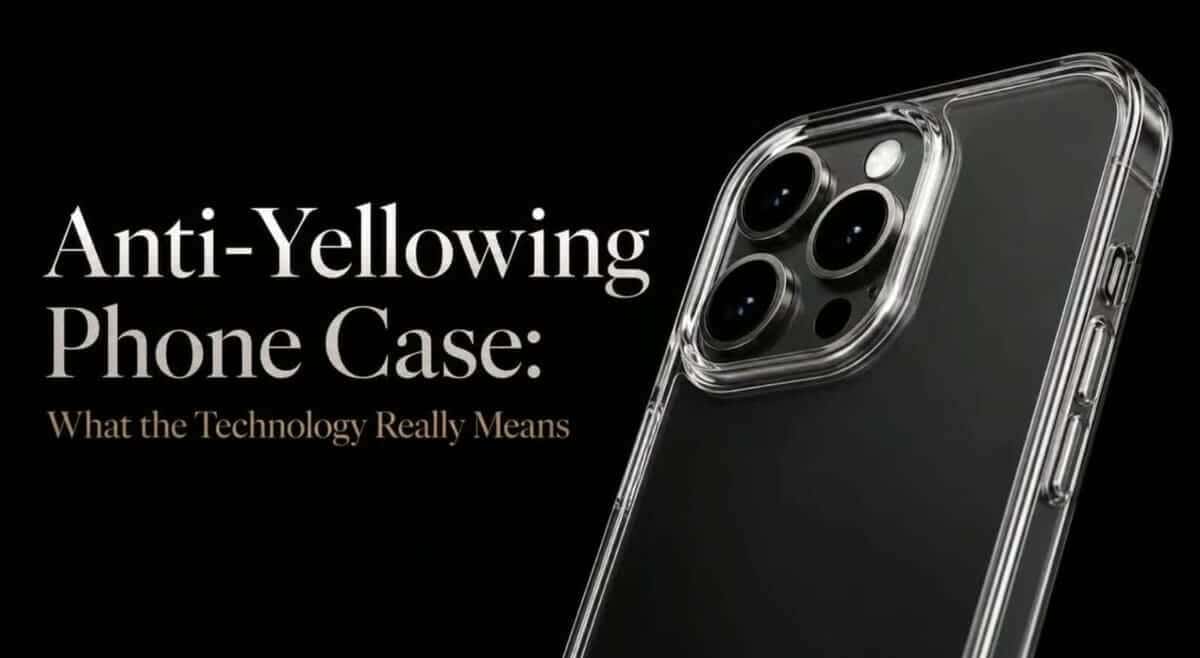
Six months in, and your once crystal-clear case looks like it's been dipped in tea. You didn't drop it, scratch it, or leave it in a puddle — it just slowly turned yellow, the way clear cases seem to do. Before you write it off as bad luck, it helps to know what's actually happening: this is a material problem with a material solution, and not every "anti-yellowing" case on the shelf delivers one.
A genuinely anti-yellowing clear case is built from polycarbonate (PC) or a PC-TPU hybrid with UV-stabilising additives, rather than plain TPU, which oxidises and discolours within a few months. In India's heat and humidity, material quality — not brand claims — determines whether a clear case stays clear or turns amber by monsoon season.
This guide breaks down exactly why clear cases discolour, what "anti-yellowing" technology actually changes at a material level, how TPU compares with polycarbonate hybrids, why Indian conditions accelerate the process, and how to pick a case that still looks new a year from now.
Why Do Clear Phone Cases Turn Yellow?
Clear cases yellow because of a chemical process called oxidative degradation. UV radiation and heat break down the polymer chains in the plastic, and as the material oxidises, it forms chromophores — molecular structures that absorb light differently and produce a visible yellow or amber tint.
Three factors drive this process:
UV exposure. Sunlight, especially UV-A rays, accelerates polymer breakdown. A case that sits on a car dashboard or near a sunny window degrades fastest.
Heat. Warm environments speed up every chemical reaction involved, including oxidation. This is why cases in tropical and desert climates yellow faster than the same case in a cooler region.
Body oils, sweat, and lotions. These contain compounds that react with certain plastics and contribute to surface discolouration, especially around the edges and camera cutout where hands make the most contact.
TPU (thermoplastic polyurethane), the soft, flexible plastic used in budget clear cases, is particularly vulnerable because its molecular structure oxidises faster than rigid polycarbonate. That's why cheap clear cases often show visible yellowing within two to four months, while better-engineered materials resist it far longer.
What Does Anti-Yellowing Technology Actually Mean?
Anti-yellowing technology refers to material and manufacturing choices that slow oxidative degradation — primarily using UV-stabilised polycarbonate, hybrid PC-TPU construction, and protective coatings, instead of relying on plain, unstabilised TPU.
In practice, this means a few things happen at the manufacturing stage:
Material selection. Polycarbonate is inherently more UV- and heat-resistant than standard TPU, so cases built around a PC backplate start with a material advantage.
UV-stabilising additives. Manufacturers can blend UV inhibitors into the plastic itself, which absorb or scatter UV radiation before it damages the polymer chain.
Surface coatings. A hard, anti-scratch coating on the case's outer layer adds a barrier between the plastic and the environment, reducing direct UV and oxygen contact.
Hybrid construction. Combining a rigid, UV-resistant PC back with a flexible TPU bumper only where shock absorption is needed limits the total TPU surface area exposed to sunlight.
No case is permanently immune to yellowing — it's a matter of physics, not marketing. But the right materials and construction can meaningfully delay it, often by a year or more compared with a basic single-layer TPU case.
TPU vs Polycarbonate: Which Material Lasts Longer?
Polycarbonate resists yellowing significantly longer than standard TPU because it's a more chemically stable, UV-resistant polymer, while TPU's softer molecular structure oxidises faster under heat and sunlight.
Feature | Standard TPU Case | Polycarbonate (PC) / PC-TPU Hybrid Case |
Yellowing resistance | Low — visible discolouration in 2–4 months in hot climates | High — clarity typically retained for 12+ months with proper care |
Clarity level | Softer, slightly hazy finish even when new | Glass-like, high-transparency finish |
Shock absorption | Excellent flexibility, absorbs impact well | Rigid on its own; needs a TPU bumper for drop protection |
Scratch resistance | Prone to fine scratches and surface dulling | Higher scratch resistance, especially with a coated back panel |
Best use case | Budget cases, short-term use | Everyday daily-driver cases, long-term ownership |
Typical construction | Single-layer TPU | Hybrid: PC back panel + TPU bumper frame |
The takeaway: a pure TPU case will almost always yellow faster than a case that uses polycarbonate for the visible back panel. This is exactly why most reputable "anti-yellowing" clear cases, including Ringke's, use a hybrid construction — polycarbonate where clarity matters most, TPU where flexibility and shock absorption matter most.
Why Phone Cases Yellow Faster in India's Climate
Phone cases yellow noticeably faster in India because sustained high temperatures, intense UV index levels, and high humidity across most of the year accelerate the oxidation process far more than in temperate climates.
A few climate-specific factors matter here:
Year-round heat. Many Indian cities regularly see summer temperatures above 40°C, and even parked vehicles or bags left in direct sun can push surface temperatures on a phone case much higher.
High UV index. India's latitude means UV-A and UV-B exposure is consistently high for most of the year, not just in a short summer window like in temperate countries.
Humidity and monsoon moisture. Combined with heat, humidity can accelerate certain polymer degradation pathways and contribute to a hazy or cloudy look in lower-quality plastics.
Everyday habits. Commuting on two-wheelers, keeping the phone in a pocket for hours, or leaving it on a sunny office desk all add cumulative UV and heat exposure that a case in a cooler, less sunny climate simply doesn't face.
This is why a clear case that performs fine in a European or East Asian climate test can still yellow noticeably faster once it's used daily in Chennai, Delhi, or Bengaluru. For Indian buyers, material quality and UV resistance aren't a nice-to-have — they're the deciding factor in how long a clear case actually looks clear.
How Ringke Fusion & Fusion X Reduce Yellowing
Ringke's Fusion and Fusion X collections are built around a hybrid polycarbonate back panel with a shock-absorbing TPU bumper, a construction designed to slow the yellowing commonly seen in single-layer TPU cases.
Hybrid PC + TPU construction. Instead of using a full TPU shell, both collections feature a crystal-clear polycarbonate back for the visible surface, while the flexible TPU bumper helps absorb everyday impacts. This design reduces the amount of TPU exposed to sunlight, helping maintain clarity for longer.
UV-resistant coating. The polycarbonate back is finished with a UV-resistant coating that helps minimise direct exposure to sunlight and environmental elements. Combined with premium materials, this slows the oxidation process that causes clear cases to yellow over time.
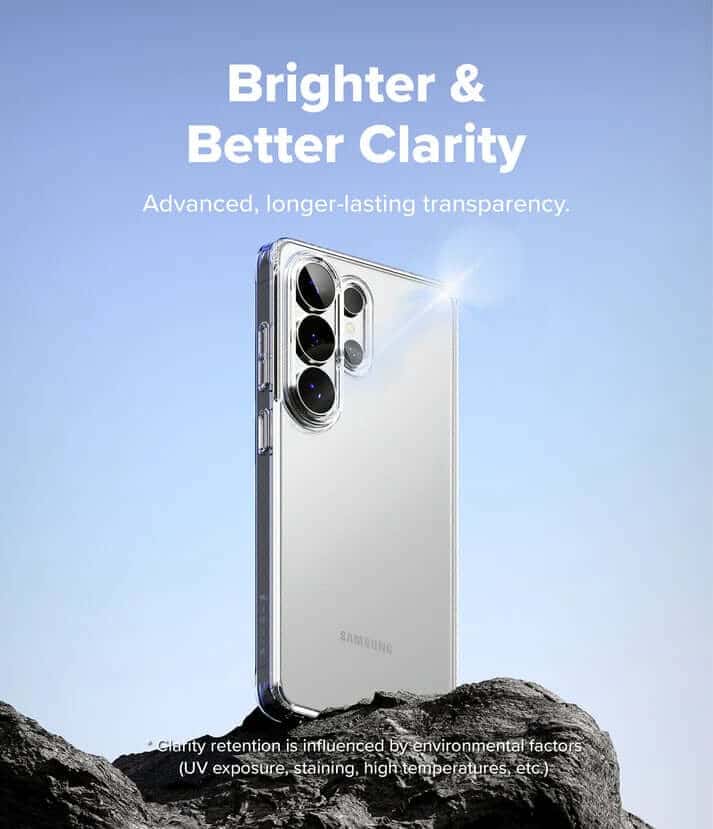
Designed for everyday protection. The hybrid construction balances long-lasting clarity with reliable daily protection. The rigid polycarbonate back helps resist scratches, while the TPU frame provides flexibility for a secure fit and added impact absorption.
Built for Indian conditions. India's heat, humidity, and high UV exposure can accelerate yellowing in low-quality clear cases. By combining a premium polycarbonate back with a TPU bumper, Ringke's Fusion and Fusion X cases are designed to retain their transparent look longer in everyday Indian conditions.
If you prefer magnetic charging, Ringke MagSafe Clear Cases use the same premium PC-TPU hybrid construction with an integrated magnetic array, so you can enjoy long-lasting clarity alongside seamless MagSafe compatibility.
Shop by your device: iPhone 17 Fusion Clear Case | iPhone 17 Air Fusion Clear Case | | iPhone 17 Pro Fusion Clear Case | iPhone 17 Pro Max Fusion Clear Case |Samsung Galaxy S26 Fusion Clear Case | Samsung Galaxy S26+ Fusion Clear Case | Samsung Galaxy S26 Ultra Fusion Clear Case
How to Choose a Clear Phone Case That Doesn't Yellow
The best way to choose a clear case that resists yellowing is to prioritise polycarbonate or PC-TPU hybrid construction over single-layer TPU, and to check for a UV-resistant coating, before comparing price or design.
Use this checklist when comparing options:
Check the material listing. Look for "polycarbonate," "PC," or "PC + TPU hybrid" in the product description rather than "soft TPU" or "silicone" alone.
Look for UV-coating or anti-yellow claims backed by material specs. A brand that explains why a case resists yellowing — material and coating, not just a sticker claim — is more trustworthy than one that only markets the term.
Avoid extended direct sunlight. Don't leave your phone on a dashboard, windowsill, or in direct sun for long periods, even with a good case.
Clean it regularly. Wipe the case with a damp microfiber cloth every week or two to remove sweat, oils, and dust before they can bake into the surface under heat.
Skip harsh cleaning agents. Alcohol-heavy or abrasive cleaners can strip protective coatings faster than normal wear would. Mild soap and water is usually enough.
Replace it if it starts hazing. Once a case begins to cloud or yellow at the edges, it's often not reversible the polymer has already started degrading. At that stage, replacing it protects your phone's resale value more than continuing to use it.
None of these steps make a case yellow-proof forever. But combined with a genuinely UV-resistant hybrid material, they meaningfully extend how long your case stays clear.
Conclusion
The best clear phone case isn't the one that promises it will never yellow—it's the one built with premium materials that resist discoloration for as long as possible. Before you buy, look beyond marketing claims and pay attention to the materials, construction, and proven durability. A well-designed clear case will keep your phone looking great while protecting it every day.