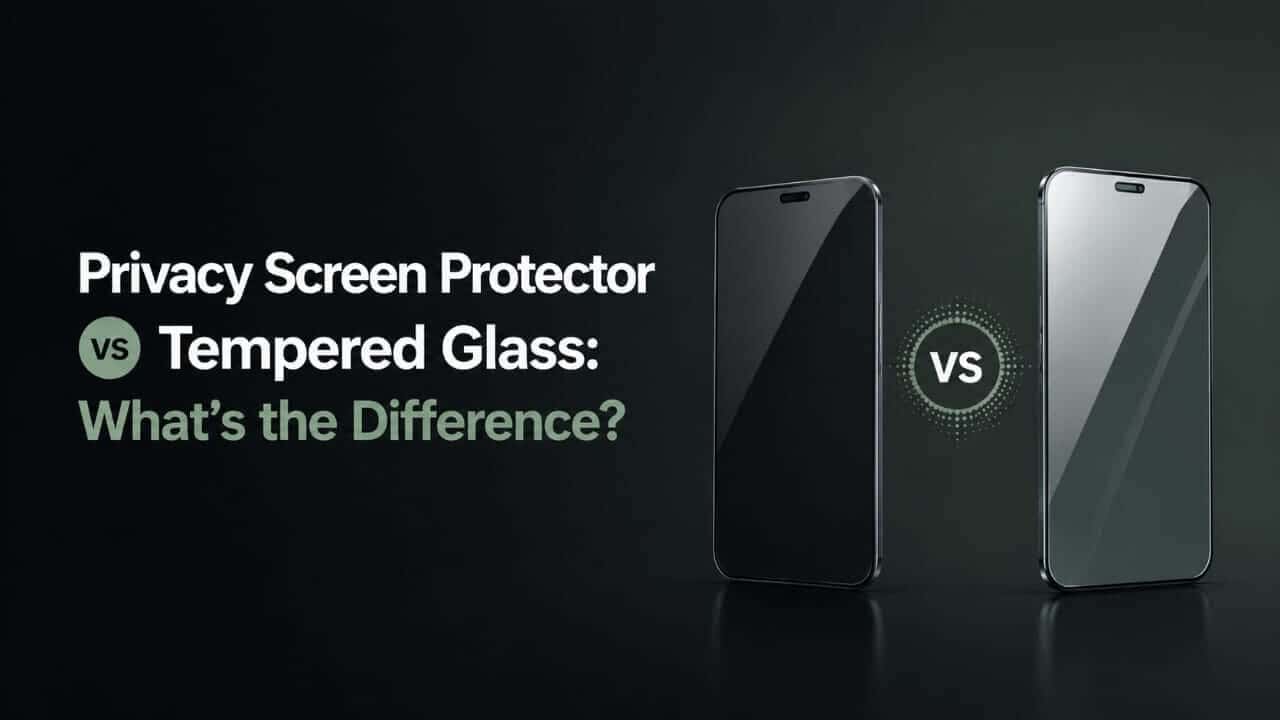
You're standing in the phone accessories aisle (or scrolling through one online), and there are two types of screen protectors staring back at you. One says "privacy." One says "tempered glass." Both promise to protect your phone. So what's actually different, and does it matter which one you pick?
It does. The right choice depends on where you use your phone, what you're protecting against, and how much you care about screen clarity. This guide breaks down the privacy screen protector vs tempered glass comparison so you can make a decision that actually fits your life, not just whoever wrote the product description.
What Is a Privacy Screen Protector?
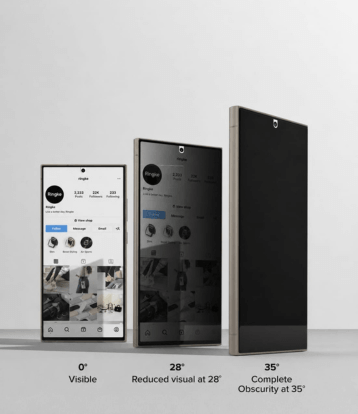
A privacy screen protector is a screen cover with a micro-louver filter built into it. Think of it like a window blind for your phone screen. When you look at your phone straight on, the screen looks normal. When someone looks at it from the side, they see black.
Most privacy protectors use a 30-degree or 45-degree viewing angle cutoff. Anything beyond that angle goes dark for the person peeking.
They're made in two versions: film-based (thinner, more flexible) and tempered glass with a privacy layer added in. The glass versions add physical drop protection on top of the visual privacy.
Who reaches for these? Mostly people who handle sensitive information on their phones in public. Bankers, lawyers, healthcare workers, anyone reading work emails on the subway. Also people who just don't love strangers reading their texts over their shoulder, which is a pretty reasonable preference.
What Is a Tempered Glass Screen Protector?
Tempered glass is exactly what it sounds like: glass that's been heat-treated to be harder and more shatter-resistant than regular glass. When it breaks, it tends to crumble into small blunt pieces rather than sharp shards.
A tempered glass screen protector sits directly on your phone screen and takes the hit so your actual display doesn't have to. Drops, keys in a bag, accidental face-down moments on a table. It handles all of that.
Most tempered glass protectors are rated on the Mohs hardness scale. A rating of 9H is standard for quality options. Your phone screen itself usually sits around 6-7H, so a 9H protector gives it meaningful extra protection.
They also tend to add an oleophobic coating that reduces fingerprint smudges and makes the screen easier to clean.
No privacy filter. Just pure protection and clarity.
Key Differences: Privacy Screen Protector vs Tempered Glass
Here's where things get concrete.
Privacy
Tempered glass does nothing to stop someone from reading your screen from an angle. A privacy screen protector blocks side-angle views completely. If you regularly use your phone in open offices, airports, cafes, or public transit, that distinction matters a lot.
Durability
Standard film-based privacy protectors are softer than tempered glass and scratch more easily. A tempered glass privacy protector (the hybrid kind) offers both privacy and physical drop protection, but they tend to cost more. Plain tempered glass is generally the most durable single-layer option for drop and scratch resistance.
Screen Clarity
This is the trade-off most people don't expect. Privacy protectors reduce screen brightness even when you're looking at it straight on. You're essentially looking through a filter. Tempered glass, by contrast, lets almost all light through. On a tempered glass protector, the screen looks nearly the same as it does without any cover. If screen quality matters to you, standard tempered glass wins this category without much debate.
Touch Sensitivity
Both work fine for normal use. Thicker film-based privacy protectors can occasionally feel slightly less responsive. Tempered glass, especially thin 0.33mm options, tends to feel closest to bare glass.
Price
Basic film privacy protectors are cheap. Tempered glass privacy protectors (with both features) run more expensive. Standard tempered glass sits in the middle and often gives the best value for people who don't need privacy filtering.
Where You Use Your Phone
This is the real deciding factor. If your phone mostly lives in your pocket or at home, a privacy filter isn't doing much work. If your job involves sensitive screens in public spaces, the brightness trade-off is worth it.
Quick Comparison Table
Feature | Privacy Screen Protector | Tempered Glass Screen Protector |
Primary Purpose | Blocks side-angle viewing | Protects against drops and scratches |
Material | Film or tempered glass with privacy layer | Heat-treated glass (9H hardness) |
Screen Clarity | Slightly reduced brightness | Near-original clarity |
Privacy Protection | Yes, 30-45 degree angle cutoff | None |
Scratch Resistance | Low (film) / High (glass hybrid) | High |
Drop Protection | Low (film) / Medium (glass hybrid) | High |
Touch Sensitivity | Slightly reduced (film type) | Near-original |
Fingerprint Resistance | Varies by product | Yes, oleophobic coating |
Price Range | Budget to premium (hybrid) | Budget to mid-range |
Best For | Public use, sensitive data, open offices | Everyday drop and scratch protection |
Pros and Cons of Each
Privacy Screen Protector
Pros:
Stops visual snooping in public
Protects personal and professional information
Available in film and tempered glass versions
Can meet compliance requirements in regulated industries
Cons:
Reduces screen brightness for the user
Film versions scratch more easily than bare glass
Colors can look slightly muted or shifted
Not useful for people who mainly use phones at home or alone
Tempered Glass Screen Protector
Pros:
High scratch and drop resistance
No impact on brightness or color accuracy
Feels like using the original screen
Wide range of options and price points
Fingerprint-resistant coatings on quality versions
Cons:
Zero privacy protection from side angles
Can crack on severe drops (though it protects the actual screen underneath)
Glass-on-glass texture isn't for everyone
Which One Should You Choose?
If you work in a public-facing environment, travel often, or handle sensitive data on your phone, a privacy screen protector is worth the slight reduction in brightness. The trade-off is real but manageable, especially if you bump up screen brightness slightly to compensate.
If your bigger concern is drops, scratches, and keeping your screen looking great, tempered glass does that better. Most people who don't work in regulated or open-office environments fall into this camp.
And if you want both? Some manufacturers make hybrid versions: tempered glass with a built-in privacy filter. They cost more, but they solve both problems at once without layering two protectors on top of each other.
Why Ringke?
Screen protectors are one of those product categories where quality differences aren't obvious until something goes wrong. Cheap protectors bubble, peel, reduce touch responsiveness, or just don't fit right around the camera cutout. You notice the problems, not the protection.
At Ringke, we make both — tempered glass screen protectors and privacy screen protectors so whichever direction you go, you don't have to compromise on build quality to get there.
Our tempered glass protectors use 9H-rated hardness, the same standard used across the industry's most durable options, with device-specific cutouts that account for curved edges and punch-hole cameras. The oleophobic coating holds up over months of daily use, not just the first two weeks.
Our privacy screen protectors use a precision micro-louver filter that cuts off side-angle viewing at 30 degrees without turning your screen into a dim mess. Brightness reduction is real, but it's controlled you won't feel like you're using your phone through a tinted car window.
We also make cases, and the fit between a Ringke case and a Ringke screen protector is intentional. No lifted edges where dust gets in, no gap at the corners that catches light. That kind of compatibility doesn't happen by accident.
Shop by your device: iPhone 17 pro max privacy screen protector | Samsung s26 ultra privacy screen protector| iphone 17 tempred glass | Oneplus 15 screen protector
Conclusion
The privacy screen protector vs tempered glass decision comes down to what you're actually protecting against. Physical damage or visual snooping. Those are two different problems, and there's no single answer that fits everyone.
If you work in a regulated industry, use your phone in open offices, or just want some control over who can see your screen on public transit, a privacy protector is the practical choice. If you're more worried about drops and scratches and want your screen to look exactly as good as the day you bought the phone, tempered glass is what you want.
Either way, buying from a brand that gets the fit and material quality right saves you the headache of a protector that doesn't sit flat or lifts at the corners a week later. Ringke makes both, and they're specific enough about model compatibility that you're not guessing at the fit.
Pick based on your actual use case. That's the only advice here that actually holds.
FAQ
1.Which is better: privacy screen protector or tempered glass?
Neither is objectively better. A privacy screen protector protects your data from visual eavesdropping but reduces screen brightness. Tempered glass protects against physical damage with no impact on display quality. The better choice depends on whether you prioritize privacy in public or screen clarity and drop protection.
2.Does tempered glass affect screen quality?
Not in any meaningful way. High-quality tempered glass is nearly transparent and lets close to 99% of light through. Touch sensitivity stays close to the original. The main difference you'll notice is a slight reduction in how sharp very fine text looks up close, which most people don't notice in daily use.
3.Are privacy screen protectors worth it?
For some people, yes. If you regularly use your phone in public places where others could read your screen, the privacy filter earns its keep. For people who mostly use their phones at home or in private settings, the trade-off in screen brightness isn't worth it.
4.Can I use both a privacy screen protector and tempered glass at the same time?
Technically you can layer them, but it creates problems. Touch sensitivity drops, edges don't align cleanly, and the combination looks noticeably worse. The better option is a single hybrid product that combines both features in one piece of tempered glas