Accidental drops can happen at any time, whether your phone slips from your hand, falls from a table, or gets knocked off a surface. Even a single drop can leave scratches, damage the frame, affect the camera, or crack the screen.
This is where a protective phone case can make a difference. Unlike a basic case designed mainly to cover the phone, a protective case is built with features that help handle everyday impact, such as reinforced corners, shock-absorbing materials, raised edges, and a secure fit.
But what actually makes a phone case protective, and how do you know which level of protection is right for you? In this guide, we'll look at how protective phone cases are designed for drop protection, the features to consider when choosing one, and the different types of protective cases available.
What Is a Protective Phone Case?
A protective phone case is a layer built around your phone specifically to absorb and redirect the force of impact, rather than just to cover the back and sides. Every case technically "covers" your phone. Not every case protects it.
The difference comes down to design: material choice, wall thickness, corner construction, and how the case is engineered to behave in the half-second after your phone leaves your hand. A protective case spreads that impact energy across a wider surface and away from the phone's frame and screen, instead of letting it concentrate at one point.
And bulk isn't the deciding factor here. A thick case with soft, poorly reinforced corners can perform worse than a slimmer case with a properly engineered bumper. What matters is how the case is built, not how much of it there is.
How Does a Protective Phone Case Actually Protect Your Phone?
Every part of a well-designed case is doing a specific job:
Reinforced corners take the brunt of edge and corner drops, which is where phones usually land first.
Shock-absorbing materials, like TPU or a TPU-polycarbonate hybrid, flex on impact and reduce how much force actually reaches the device.
Raised bezels around the screen and camera keep glass off the ground when the phone lands face-down.
Camera protection — a raised lip or reinforced ring around the lens — stops the camera glass from taking direct contact with the surface.
A precise, secure fit stops the phone from shifting inside the case, which matters more than people expect. A loose case absorbs less of the shock because the phone itself is still moving on impact.
Ringke builds its case range around this exact logic — reinforced corners, raised bezels, and precise cutouts are standard across the Fusion-X, Alles, and Rugged Gear lines rather than being a premium add-on.
How Does Military-Grade Protection Relate to Phone Cases?
When comparing protective phone cases, you may come across the term military-grade protection. This refers to cases that have been tested under specific drop-test conditions based on a defined military standard. The testing is intended to evaluate how the case performs when subjected to controlled impacts.
However, military-grade protection should not be the only factor you consider when choosing a case. Features such as reinforced corners, shock-absorbing materials, raised bezels, and a secure fit also contribute to the overall protective design of a phone case.
If you want to understand what military-grade protection actually means, how the testing works, and whether it matters when choosing a phone case, read our detailed guide on military-grade protection and whether it matters.
What Should You Look for in a Protective Phone Case?
Before buying, run through this checklist:
Genuine impact protection (military-grade drop test ratings are a decent shorthand, though not the whole story)
Reinforced corners, not just a padded back
Raised bezels on both the screen side and camera side
Camera lens protection with precise cutouts
Durable, tested materials — not just "thick plastic"
A grippy texture that actually reduces the chance of a drop in the first place
An exact fit for your specific phone model, not a generic size
Wireless charging or MagSafe/magnetic compatibility, if you use either
A design you'll actually keep on the phone, because a case in a drawer protects nothing
That last point matters more than it sounds. The most protective case in the world only works if it's on the phone when the phone hits the floor.
Types of Protective Phone Cases
Not every drop is the same, and not every user needs the same level of protection. Ringke's case range is built around this four distinct case types, each solving for a different balance of protection, bulk, and everyday usability.
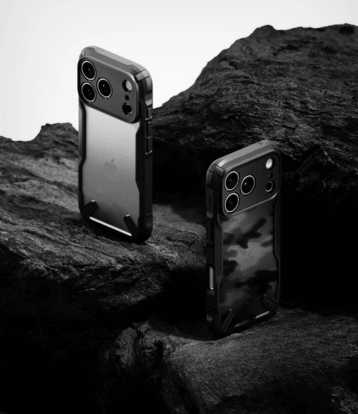
Fusion-X: Protection-First, Everyday Ready
The Fusion-X is built for people who want strong drop protection without treating their phone like a construction tool. It combines a shock-absorbent TPU bumper with a rigid polycarbonate back, reinforced at the corners specifically for drop impact. If you want a case that takes protection seriously as the primary job, Fusion-X is the starting point.
Shop by your device : iphone17 pro max Fusion x Case | Samsung s26 ultra fusion x case | oneplus15R fusion x case | Xiaomi14 Fusion X case
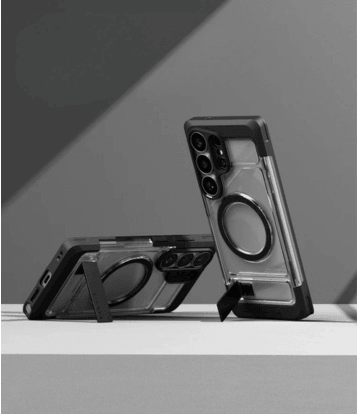
UX Magnetic with Kickstand: Protection Plus Function
The UX Magnetic case adds a two-way kickstand and MagSafe-style magnetic compatibility on top of Ringke's rugged, hybrid TPU-and-polycarbonate build. It's for people who want the same drop protection as the rest of the range, but also want the phone to prop itself up for video calls or watching something hands-free.
Shop by your device : iphone17 pro max Ux Magnetic Case | Samsungs25 ultra Ux Magnetic case | iphone17 pro ux magnetic stand case
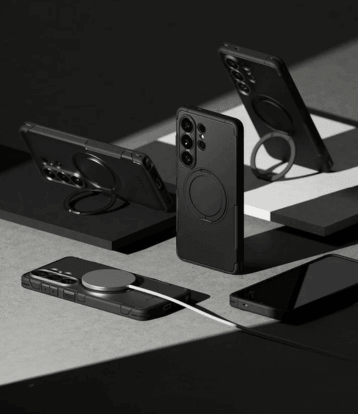
Alles: Balanced Protection with a Built-In Stand
The Alles case takes a similar approach an aluminium alloy kickstand built into a double-layer TPU and polycarbonate shell but leans slightly more toward daily-use polish. It's a strong pick if you want your case to look considered while still handling accidental drops without flinching.
Shop by your device : Samsungs25 ultra Alles Case | iphone16 pro max alles case
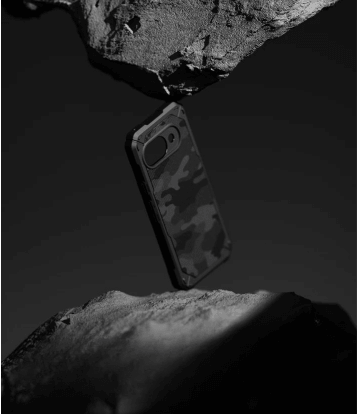
Rugged Gear: Built for Outdoor Use and Heavier Wear
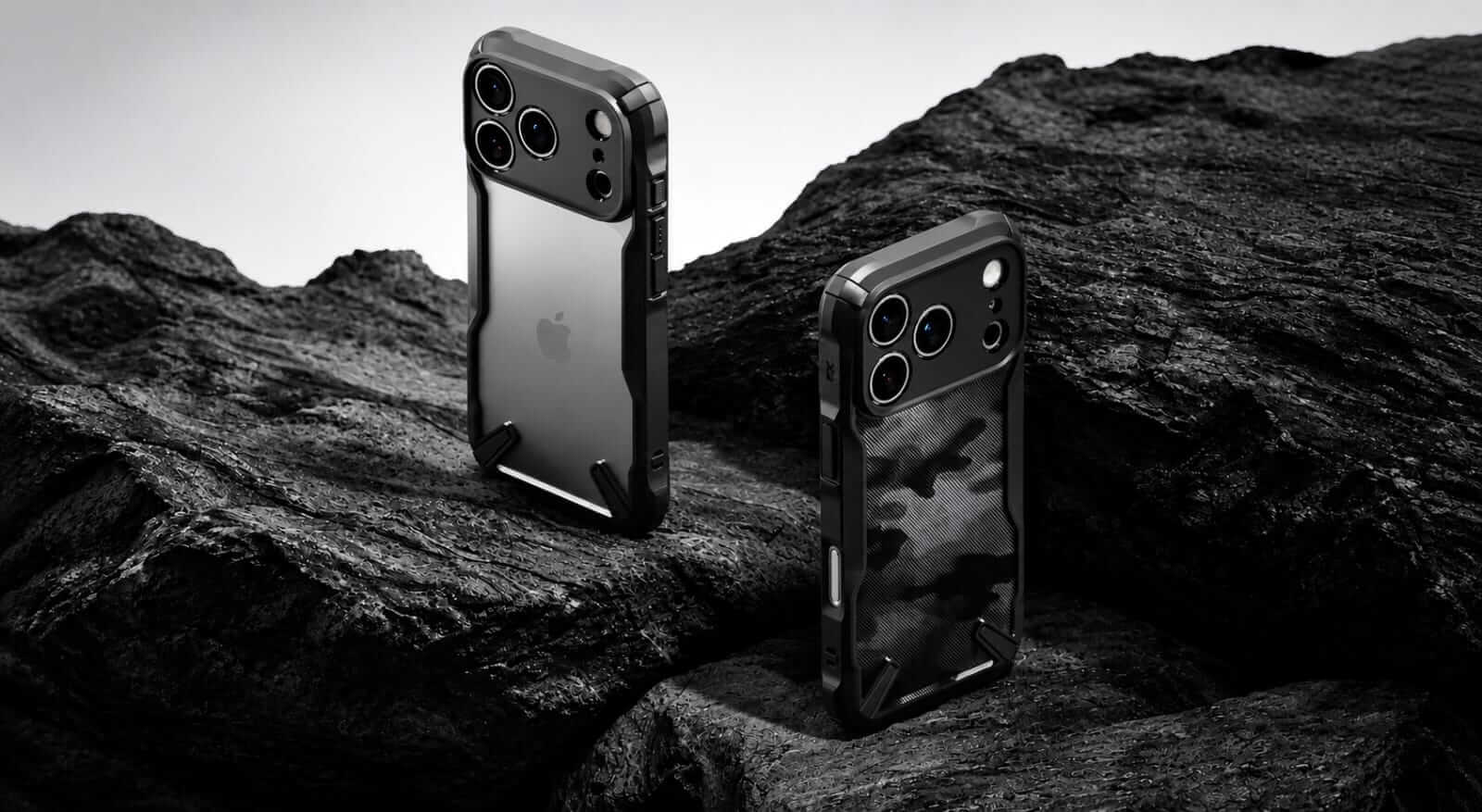
The Rugged Gear case is Ringke's answer for people who put their phone through more than a typical day travel, outdoor work, active use. Its ribbed TPU frame is built to distribute shock across a wider surface, and the non-slip texture cuts down on drops happening in the first place. It's the case to reach for if your day involves more than a desk and a sofa.
Shop by your device : Samsungs25 ultra rugged case | iphone16 pro max rugged case | iphone17 pro rugged case
Does a Protective Case Need to Be Bulky?
No , and this is one of the more common misconceptions around drop protection. Thickness on its own doesn't stop a phone from breaking. What stops it is where the material sits and how it's shaped.
A case with a thin but precisely engineered corner structure, raised bezels, and shock-absorbent TPU can outperform a thick case that's uniformly padded with no reinforcement where it counts. Ringke's Fusion line is a good example of this in practice: it's noticeably slimmer than Fusion-X or Rugged Gear, but it doesn't cut corners on the actual corners.
How to Choose a Protective Case for Drop Protection
Think honestly about how you use your phone day to day.
Estimate your real risk of dropping it commute, gym, outdoor work, kids in the house.
Decide how much protection that risk actually justifies.
Check corner and edge coverage specifically, not just overall bulk.
Confirm camera and screen clearance raised edges only help if they're tall enough.
Consider extra features you'll genuinely use: kickstand, magnetic mount, wireless charging.
Make sure the case is built for your exact phone model, not just "compatible with most."
Protective Phone Case vs Regular Phone Case
| Feature | Protective Case | Regular Case |
Construction | Reinforced, often dual-layer (TPU + polycarbonate) | Usually single-layer, thinner plastic or silicone |
Corner reinforcement | Purpose-built for drop impact | Minimal or none |
Raised edges | Standard, sized to clear screen and camera | Often shallow or absent |
Materials | Shock-tested TPU, polycarbonate, sometimes reinforced frames | Basic silicone or hard plastic |
Everyday durability | Built to hold up over months of regular knocks | Wears and cracks faster under repeated impact |
Best for | Anyone who wants real drop insurance | Anyone prioritising slimness or looks over impact protection |
Common Mistakes When Choosing a Protective Phone Case
Picking a case for how it looks and assuming protection follows
Assuming a thicker case is automatically a safer one
Ignoring corner protection specifically, since that's where most drops land
Not checking camera clearance before buying
Buying the wrong case for your exact phone model or variant
Ignoring grip texture, which prevents drops in the first place
Not accounting for how the phone is actually used day to day
Conclusion
A protective phone case is more than just a cover. The right case can help protect your smartphone from everyday drops, bumps, and impacts through features such as reinforced corners, shock-absorbing materials, raised edges, and a secure fit.
Choosing the right case ultimately comes down to your phone, your daily routine, and the level of protection you need. Ringke offers a range of protective designs to suit different preferences, from protection-focused cases to options that combine everyday protection with added functionality.
Explore the Ringke Protective Phone Cases to find a case that fits your needs.
FAQs
What is a protective phone case?
It's a case built specifically to absorb and redirect impact from drops and bumps, using reinforced corners, shock-absorbing materials, and raised edges — rather than just a decorative cover.
What makes a phone case protective?
Reinforced corners, raised bezels around the screen and camera, shock-absorbent materials like TPU or TPU-polycarbonate hybrids, and a precise, secure fit that stops the phone from shifting inside the case.
Are protective cases good for drop protection?
Yes, when they're properly engineered. A well-built protective case it significantly reduces the force that reaches your phone during a drop, compared to a regular case or no case at all.
Does a protective phone case need to be thick?
No. Effective protection comes from where the material is placed corners, edges, camera area not from overall thickness. A well-designed slim case can outperform a bulky, poorly reinforced one.
What type of phone case is best for accidental drops?
For everyday accidental drops, Fusion-X and Alles both offer strong protection. If you're more active or outdoors often, Rugged Gear is built for that level of use.
How do I choose the right protective phone case?
Start with how you actually use your phone, check corner and camera coverage, confirm it's made for your exact model, and pick a case type Fusion-X, UX Magnetic, Alles, or Rugged Gear — that matches your risk level and the features you want.